
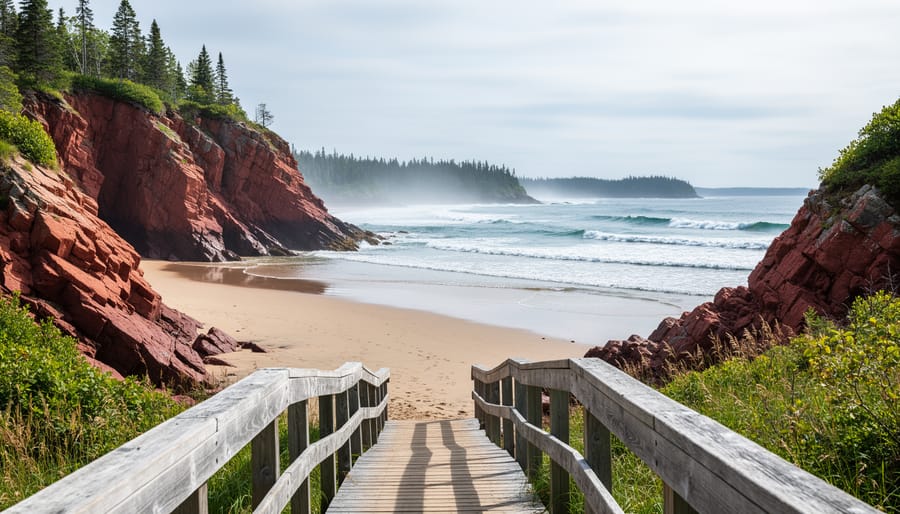
Nova Scotia’s 124 provincial parks protect nearly 43,000 hectares of Atlantic coastline, Acadian forest, and cultural heritage sites, a system quite different from the mountain-focused BC national parks most western Canadians know. If you’re drawn to the natural landscapes of British Columbia, you’ll discover something surprising about Nova Scotia’s parks: they’re built around the sea rather than the summits. Where BC delivers alpine meadows and old-growth rainforest, Nova Scotia offers tidal beaches, warm ocean swimming (yes, genuinely warm by July), and red sandstone cliffs carved by the world’s highest tides.
The province’s park system serves multiple purposes. Some protect rare ecosystems like the gypsum karst landscapes at Malagash or the last remaining old-growth hemlock stands. Others preserve Mi’kmaq heritage sites that have been gathering places, fishing camps, and ceremonial grounds for thousands of years. Many parks double as community recreation hubs where locals swim, paddle, and gather much like BC residents use their neighborhood trails.
What makes Nova Scotia’s parks particularly appealing for BC visitors is their accessibility. The entire province is roughly the size of Vancouver Island, meaning you can visit three or four distinct park ecosystems in a single day. No multi-hour drives through wilderness corridors. The challenge isn’t reaching these places but choosing which coastal cove, which forest trail, which historic lighthouse to visit first. This guide maps the essential parks worth your time, explains what sets each apart, and provides the cultural context that transforms a simple hike into a deeper understanding of Canada’s maritime identity.
Why Nova Scotia Provincial Parks Are Worth Visiting
If you’ve explored British Columbia’s towering peaks and ancient rainforests, Nova Scotia’s provincial parks offer something your mountain-trained legs might not expect: coastlines shaped by the world’s highest tides, beaches warm enough for serious swimming, and trails where maritime forest meets centuries of living culture. These eastern parks don’t try to compete with BC’s vertical drama. Instead, they deliver experiences you simply cannot find on the Pacific coast.
Nova Scotia’s 130-plus provincial parks protect a maritime landscape fundamentally different from anything west of the Rockies. Where BC parks showcase granite and glaciers, these Atlantic reserves reveal sandstone cliffs carved by relentless waves, salt marshes teeming with shorebirds, and Acadian forests dominated by yellow birch and sugar maple instead of Douglas fir. The Bay of Fundy’s tidal range reaches 16 metres, high enough to submerge a five-story building twice daily, creating intertidal zones so vast and dynamic they function as entire ecosystems appearing and disappearing on a predictable schedule.
The Mi’kmaq have inhabited these lands for over 13,000 years, and their presence shapes park interpretation in ways that parallel BC’s indigenous tourism emphasis but with distinctly eastern traditions. You’ll encounter petroglyphs carved into lakeside slate, place names derived from Mi’kmaw language, and interpretive programs explaining how coastal peoples harvested clams, hunted seals, and navigated by reading currents and stars. This isn’t tokenistic acknowledgment. It’s living culture integrated into how parks present the land’s story.
Nova Scotia’s parks stand out through features rarely found together elsewhere:
– Tidal phenomena where the ocean floor becomes a hiking trail twice daily, revealing ancient fossils and stranded marine life
– Ocean beaches with water temperatures reaching 20°C in summer, genuinely swimmable without a wetsuit
– Celtic and Acadian cultural sites within park boundaries, from Gaelic-speaking communities to French-heritage villages
– Fossil-bearing cliffs containing 300-million-year-old tree trunks and trackways from creatures that predated dinosaurs
– Coastal hiking trails accessible to moderate fitness levels, with ocean views requiring elevation gains measured in metres, not hundreds of metres
For adventure travelers accustomed to BC’s backcountry demands, these parks offer different rewards. You’ll trade alpine scrambles for tide-watching strategy, forest bathing beneath cedars for shoreline walks through sea lavender, and mountain solitude for encounters with lobster fishers who know every cove by name. The cultural depth here runs as profound as any wilderness experience, with human stories woven into landscapes rather than kept separate from them.
Top Nova Scotia Provincial Parks to Explore
1. Cape Chignecto Provincial Park
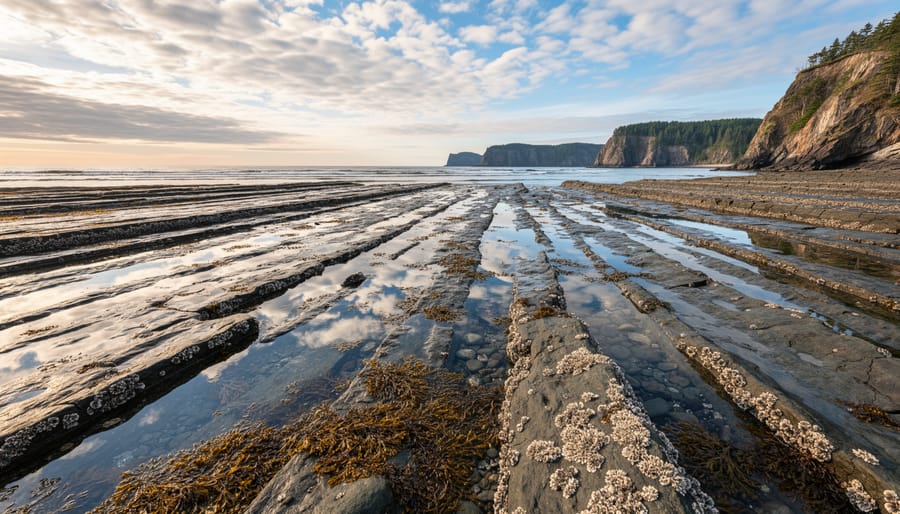
Cape Chignecto stands apart as one of Nova Scotia’s most challenging wilderness experiences. If you’ve tackled BC’s West Coast Trail or the Juan de Fuca Marine Trail, this 51-kilometre coastal circuit will feel familiar in its rugged demands, except here you’ll navigate alongside the world’s highest tides rather than Pacific swells.
The park’s Coastal Trail delivers relentless elevation changes. You’ll descend steep ravines to sea level, cross tidal rivers (timing is critical), then climb back up 180-metre cliffs overlooking the Bay of Fundy. Three backcountry campsites divide the loop into manageable sections, though most hikers need three to four days to complete the circuit. Eatonville and Mill Brook Brook campsites perch on coastal bluffs; Refugee Cove sits at beach level where you can witness the tide’s 12-metre rise firsthand.
The Mi’kmaq people knew this coastline as a seasonal hunting and fishing ground long before European contact. Park interpretive programs occasionally share stories of these traditional uses, and trail names like Eatonville reference the area’s 19th-century settlement history layered atop millennia of indigenous presence.
Pack everything in and out, there’s no resupply. Water sources exist but require treatment. Black bears are common, so bring a bear hang or canister. The park enforces strict Leave No Trace protocols, including designated camping only and no fires outside established rings. Book campsites months ahead for July and August. Spring and fall offer solitude but bring colder, wetter conditions that amplify the challenge.
2. Cape Breton Highlands (Provincial Park Portions)
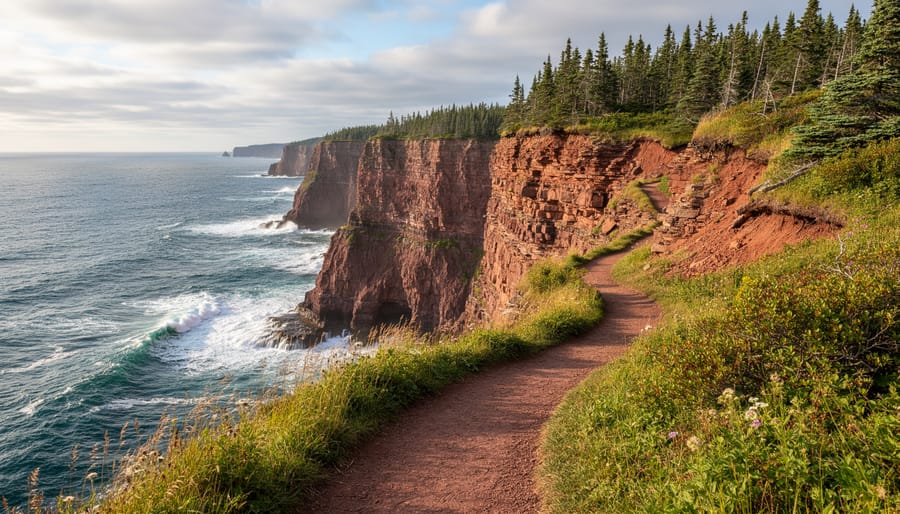
Cape Breton Highlands offers some of the most dramatic coastal scenery you’ll find in Atlantic Canada, with rugged headlands that plunge into the Gulf of St. Lawrence and sweeping plateaus wrapped in Acadian forest. While the famous Cabot Trail winds largely through the national park, several provincial park areas and protected zones integrate seamlessly with the federal lands, creating an interconnected system of trails and viewpoints that rival anything BC travelers know from the Sea-to-Sky corridor.
The Acadian forest here differs entirely from BC’s coastal rainforests, think sugar maple, yellow birch, and balsam fir creating a canopy that explodes in autumn colour. The ecosystem supports moose, black bears, and coyotes, plus bald eagles riding thermals above the cliffs. Coastal headlands expose ancient rock formations, and on clear days you can see clear across to Prince Edward Island.
What sets Cape Breton apart is the layered cultural heritage. The Mi’kmaq have called this region Unama’ki for millennia, and many trails follow routes their ancestors used for seasonal travel and hunting. Meanwhile, Gaelic-speaking Scottish settlers left their mark in place names, music traditions, and crofting landscapes that still pattern the valleys. Provincial interpretation programs increasingly honour both histories, offering a richer context than you’d get from scenery alone.
Plan for variable weather, coastal fog can roll in fast, and wind speeds on exposed sections regularly hit 60 kilometres per hour. The hiking rewards patience. Trail conditions range from maintained boardwalks to steep, root-crossed climbs that demand proper footwear and respect for maritime weather patterns.
3. Kejimkujik National Park and Historic Site
Though Kejimkujik operates under Parks Canada rather than provincial jurisdiction, its importance to Nova Scotia’s outdoor experience makes it essential to include. For BC travelers accustomed to paddling Bowron Lakes or exploring Gwaii Haanas, Kejimkujik offers a parallel wilderness-cultural fusion that feels both familiar and distinctly maritime.
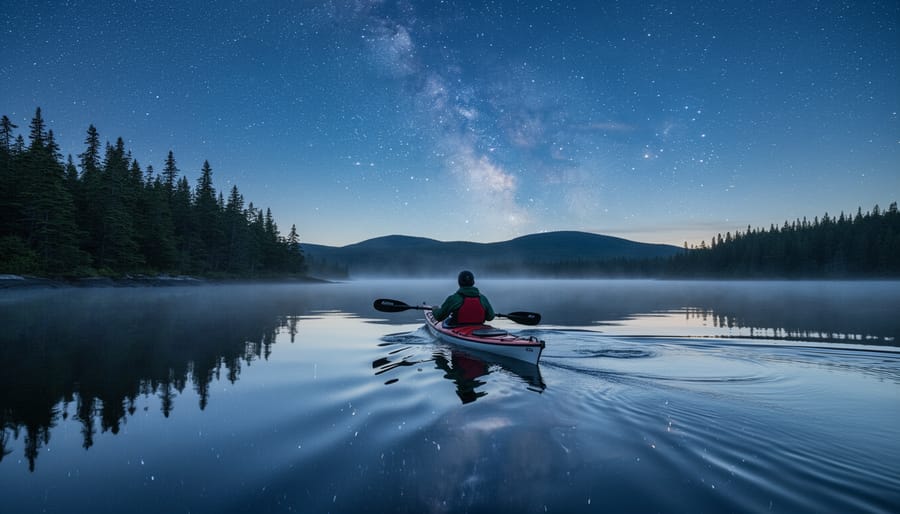
The park’s centerpiece is its network of interconnected lakes and rivers, designed for canoe exploration. Unlike BC’s alpine lake circuits, these waterways wind through gentle Acadian forest, creating intimate paddling experiences where you might spot river otters, painted turtles, and loons echoing across still water. Multi-day backcountry canoe routes with lean-to shelters along portages recall BC’s wilderness camping traditions, adapted to eastern hardwood forests.
What sets Kejimkujik apart is its exceptional Mi’kmaq cultural presence. The park protects over 500 petroglyphs carved into lakeside slate, depicting everything from sailing ships to traditional hunting scenes. Guided interpretation programs led by Mi’kmaq educators explain these rock carvings’ significance, creating cultural learning opportunities that BC’s indigenous tourism advocates will recognize as genuine knowledge-sharing rather than performative display.
Kejimkujik earned Dark Sky Preserve certification in 2010, the first such designation east of Ontario. Summer astronomy programs take advantage of minimal light pollution, revealing star fields rarely visible in BC’s coastal regions. The contrast between paddling sun-dappled waterways by day and stargazing from granite shores at night creates memorable experiences.
The park operates year-round, with winter offering snowshoeing and cross-country skiing through hardwood forests that transform dramatically with snow cover.
4. Taylor Head Provincial Park
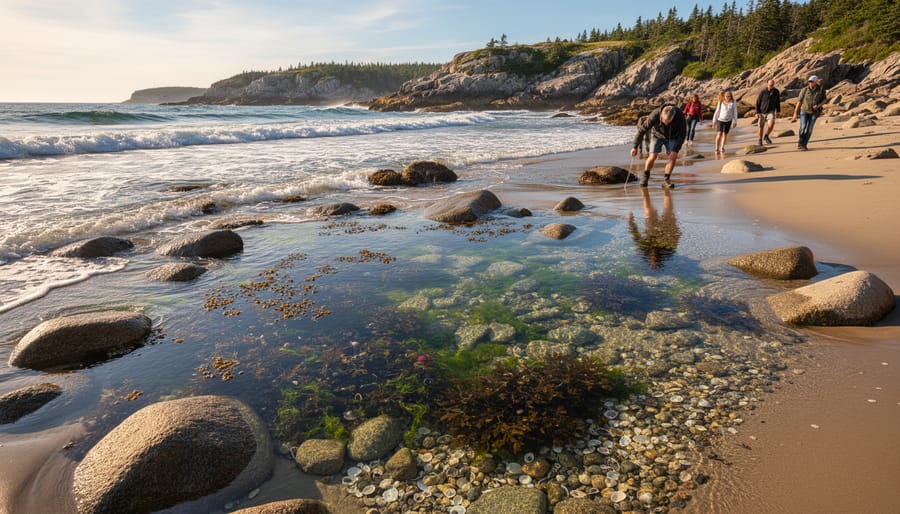
Taylor Head Provincial Park stands out as one of Nova Scotia’s most accessible coastal treasures, offering families and casual hikers the chance to experience dramatic Atlantic scenery without the demanding backcountry commitment required at Cape Chignecto. Located along the Eastern Shore just 100 kilometers from Halifax, this 1,000-hectare park wraps around a narrow peninsula jutting into the Atlantic, creating a landscape of sheltered coves on one side and wave-battered headlands on the other.
The park’s trail network suits all ability levels, with the 10-kilometer Headland Trail serving as the centerpiece. This loop takes hikers through coastal barrens, tucked-away beaches, and exposed granite points where you can watch waves crash against ancient rock formations. Shorter options like the 2.5-kilometer Bull Beach Trail provide quick access to pristine sandy shores perfect for beachcombing and picnicking.
Bird enthusiasts will find Taylor Head particularly rewarding during spring and fall migrations, when the peninsula acts as a natural funnel for species traveling the Atlantic flyway. Expect to spot everything from piping plovers nesting on protected beaches to bald eagles hunting along the shoreline. Seals frequently haul out on offshore rocks, especially near Psyche Cove.
The park’s campground offers 50 sites tucked among spruce trees, just steps from swimming beaches. Unlike BC’s mountain campgrounds, you fall asleep to the sound of surf rather than rivers. Facilities remain basic but functional, with vault toilets and well-maintained fire pits. The beach camping experience here provides a gentler introduction to Maritime outdoor culture compared to the province’s more rugged wilderness parks.
Practical Information for Visiting Nova Scotia Provincial Parks
Planning a Nova Scotia park adventure from British Columbia requires understanding a different system than you’re accustomed to at home. Unlike the provincial vs national park distinctions you know in BC, Nova Scotia operates a smaller but well-maintained network of provincial parks, most of which close for winter. The good news? The fee structure is straightforward and significantly more affordable than BC’s day-use parking charges.
Most Nova Scotia provincial parks operate from late May through early October, with peak season running July through August. A few parks like Kejimkujik offer year-round access, but services and facilities scale back considerably after Thanksgiving. Day-use parking fees typically run $4-6 per vehicle, while annual provincial park passes cost around $45 for Nova Scotia residents and $60 for out-of-province visitors. If you’re planning a week-long exploration, the annual pass pays for itself quickly.
| Park | Best Season | Primary Activities | Camping Options |
|---|---|---|---|
| Cape Chignecto | June-September | Backcountry hiking, tidal viewing | Wilderness campsites only |
| Taylor Head | May-October | Beach walks, birdwatching | Drive-in and beach camping |
| Kejimkujik | Year-round (limited winter) | Canoeing, petroglyphs, dark sky | Frontcountry and backcountry |
| Five Islands | June-September | Fossil hunting, coastal trails | Drive-in campsites |
Campground reservations open in early February through the provincial booking system. Popular spots like Kejimkujik’s frontcountry sites fill rapidly for July and August weekends, so book three months ahead if possible. Backcountry sites at Cape Chignecto require advance registration but rarely sell out except for long weekends.
For BC travelers making the cross-country journey, flying into Halifax provides the most practical access point. Rental vehicles are essential since public transit doesn’t serve park areas. A week-long itinerary might anchor in Halifax, allowing day trips to Taylor Head (90 minutes east) and Five Islands (90 minutes north), with overnight trips to Cape Chignecto (2.5 hours northwest) and Kejimkujik (2 hours southwest). The province’s compact size means you can realistically visit four or five parks in a week without excessive driving between destinations.
Local Tips and Cultural Considerations
Experiencing Nova Scotia’s parks fully means respecting both the land and the people who have stewarded it for millennia. The Mi’kmaq Nation’s deep connection to these territories predates European contact by thousands of years, and many parks sit on unceded Mi’kmaq land. Before you explore, take time to learn about local protocols, some communities welcome visitors to cultural events and interpretive programs, while others ask that certain areas be observed from designated trails only. When you encounter petroglyphs, sacred sites, or cultural markers, photograph from a respectful distance and never touch these irreplaceable historical records. If you’re drawn to learning how indigenous peoples have sustained themselves through traditional practices, the connection between food and culture offers valuable context, and understanding Indigenous food traditions can deepen your appreciation for the Mi’kmaq relationship with Nova Scotia’s ecosystems.
Maritime weather shifts rapidly, far more so than BC’s coastal climate. Pack layers even in summer, as morning fog can give way to afternoon sun, then evening drizzle. September through November brings spectacular foliage but also unpredictable storms rolling in from the Atlantic. Wildlife encounters differ from what you know out west: moose are common and less predictable than deer, bald eagles nest along shorelines, and harbor seals haul out on tidal rocks. Give all animals wide berth, especially cow moose with calves in spring.
Leave No Trace principles apply, but adapt them to maritime ecosystems. Coastal campsites require extra care, pack out everything including food scraps, as gulls and crows quickly learn to scavenge. Avoid trampling fragile dune grasses and beach plants that prevent erosion. Many Acadian villages sit near park boundaries, offering opportunities to experience French-Canadian heritage through local museums, traditional music, and community festivals. Stop in respectfully, support local businesses, and ask permission before photographing people or private property. The hospitality is genuine, but tourism here thrives on mutual respect rather than transactional encounters.
Frequently Asked Questions
Do I need a separate permit for each Nova Scotia provincial park?
No, Nova Scotia uses a provincial parks pass system similar to BC’s day-use parking model. One vehicle pass covers entry to all provincial parks, while individual camping reservations are booked separately through the park system.
How do park costs compare to British Columbia?
Nova Scotia’s provincial parks are generally more affordable than BC equivalents. Daily vehicle passes run around $5-8, and campsite fees typically range from $25-40 per night, compared to BC’s $35-50 for similar facilities.
What’s the best season to visit these parks?
Late spring through early fall (May to October) offers the most reliable access and comfortable weather, with July and August being peak season. September delivers spectacular foliage and fewer crowds, though some facilities close after Labour Day.
What wildlife differences should BC travelers expect?
You’ll encounter moose instead of elk, bald eagles and ospreys along the coast, and harbour seals in tidal areas. Bears are less common than in BC, but you’ll want to watch for white-tailed deer on roads and learn about tidal safety around the Bay of Fundy, which doesn’t have a West Coast equivalent.
These parks operate differently from the year-round access many BC travelers expect. Most Nova Scotia provincial parks close completely from late October through April, with facilities winterized and gates locked. If you’re accustomed to BC’s shoulder-season camping or winter recreation, plan your eastern trip for the warmer months when full services are available.
Crowding patterns also differ. While BC’s most popular parks see heavy use from May through September, Nova Scotia’s parks concentrate their crowds into a shorter July-August window. Visit in June or September for a quieter experience that still delivers excellent weather and open facilities, particularly at spots like Taylor Head where you might have entire beaches to yourself midweek.
Exploring Nova Scotia’s provincial parks offers British Columbia travelers a profound appreciation for the coastal diversity that defines our country. While BC’s mountains and temperate rainforests shape one vision of Canadian wilderness, Nova Scotia’s dramatic tidal coastlines and maritime ecosystems present an entirely different relationship between land and sea, one that deepens your understanding of how landscape shapes culture, from Mi’kmaq traditions to Acadian heritage.
The journey across Canada reveals that sustainable outdoor tourism isn’t confined to one region. Whether you’re practicing Leave No Trace on a Cape Breton headland or a Vancouver Island trail, the principles of respecting indigenous lands and protecting fragile ecosystems remain universal. Nova Scotia’s park system demonstrates how smaller protected areas can still deliver powerful wilderness experiences and meaningful cultural connections.
Returning to British Columbia after exploring eastern Canada, you’ll likely view your home province’s outdoor treasures with fresh perspective. Each coast offers irreplaceable experiences, BC’s towering cedars and Nova Scotia’s Bay of Fundy tides both deserve protection and respectful exploration. The real gift is recognizing that Canada’s outdoor heritage thrives in its variety, and that responsible travelers have the privilege of experiencing both.