
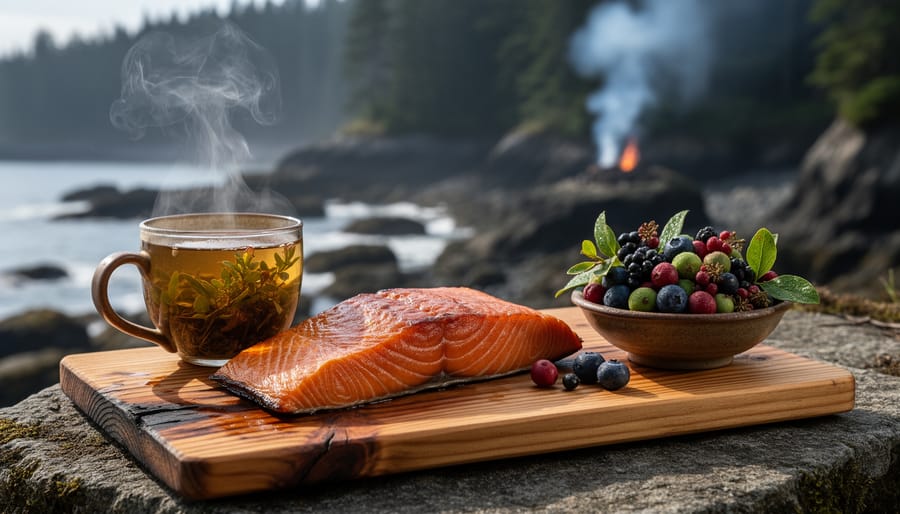
Native food and drink in British Columbia offers travelers a gateway to centuries-old wellness practices rooted in indigenous knowledge, where traditional salmon preparations, foraged berries, medicinal teas, and ceremonial dishes connect visitors to the land’s original stewards and their time-tested understanding of nourishment. These authentic culinary experiences go far beyond tasting unique flavors. They represent living traditions that bind food and culture together in ways that modern wellness movements are only beginning to rediscover.
For thousands of years, First Nations communities across British Columbia have cultivated sophisticated food systems that sustained entire nations while maintaining ecological balance. Wild sockeye salmon smoked over alder wood, camas bulbs slow-roasted in underground pits, seaweed harvested from tidal zones, and beverages steeped from Labrador tea or Douglas fir needles weren’t simply sustenance. Each carried stories, ceremonies, and healing properties passed down through generations.
Today’s indigenous-led food experiences let you participate respectfully in this legacy. You might join a guided foraging walk where elders share plant knowledge, attend a traditional feast prepared using ancestral methods, or learn about the spiritual significance behind salmon’s return to spawning grounds. These encounters reveal how indigenous peoples understood nutrient density, seasonal eating, and food as medicine long before these concepts entered mainstream wellness vocabulary.
But accessing these experiences requires more than booking a tour. Understanding the protocols, recognizing the sacred nature of certain foods, and approaching these opportunities with genuine curiosity rather than superficial tourism makes the difference between cultural appropriation and meaningful exchange. The communities sharing their traditions deserve travelers who come ready to listen, learn, and honor the wisdom being offered.
The Sacred Bounty: Traditional Indigenous Foods of British Columbia
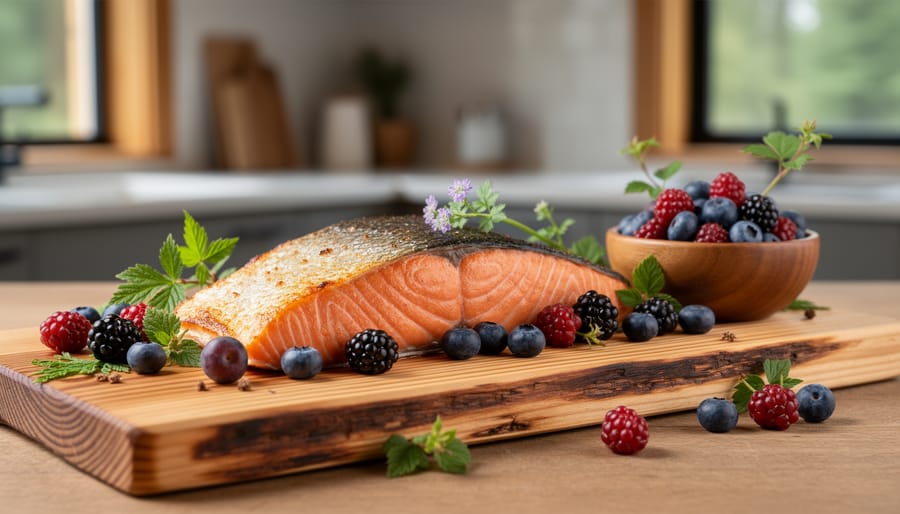
The Four Sacred Foods
Salmon stands as the cornerstone of coastal First Nations diets, revered not merely as food but as a relative who sacrifices itself to sustain the people. The Sto:lo Nation tells of Salmon People who transform each year to feed humanity, requiring respectful handling of every bone to ensure their return. Traditional preparation methods include wind-drying on cedar racks, pit-cooking, and smoking over alder wood, techniques that concentrate nutrients while preserving flesh for winter months when fresh catches cease.
Cedar, though not consumed directly, provides essential tools for food preparation and storage. Its bark weaves into baskets for berry gathering, its wood shapes cooking boxes where heated stones boil water, and its boughs line steaming pits where salmon roasts alongside root vegetables. The Haida say cedar is the tree of life itself.
Sweetgrass, braided and burned ceremonially, purifies spaces before communal feasts and harvest celebrations. While less central than prairie cousins, BC’s coastal sweetgrass varieties flavor teas and sacred waters during vision quests.
Wild berries, soapberries, salal, huckleberries, saskatoons, sustained communities throughout seasonal migrations across BC’s coastal ecosystems and interior forests. Women harvested berries using specialized combs, preserving them as leather-dried cakes mixed with rendered eulachon oil, creating calorie-dense provisions that lasted years. Soapberries, whipped into a frothy dessert called “Indian ice cream,” featured at potlatches celebrating abundance and generosity.
Seasonal Harvesting and Sustainability
Indigenous peoples across BC developed harvesting practices that worked in harmony with natural cycles, ensuring abundance for generations. Rather than depleting resources, these techniques actively maintained ecosystem health across diverse British Columbia landscapes.
Salmon harvesting exemplified this wisdom. First Nations built fish weirs at strategic river points, sophisticated structures that allowed selective fishing while letting spawning populations pass upstream. The traditional use of fish weirs demonstrates how communities could take what they needed without disrupting the salmon’s life cycle, with some designs adjustable to control harvest volumes based on run strength.
Camas bulb gardens in coastal meadows represented deliberate cultivation, not simple foraging. Families tended specific patches for generations, timing harvests after flowering when bulbs reached peak nutrition. They would dig selectively, leaving smaller bulbs to mature and intentionally loosening soil to promote growth, essentially proto-horticulture that increased yields over time.
Berry picking followed strict protocols. Harvesters took only a portion from each bush, leaving fruit for birds and bears who helped spread seeds. They pruned strategically while picking, which encouraged fuller growth the following season. Some berries required specific thanks or offerings before harvest, reinforcing the spiritual relationship between people and plants.
These weren’t merely practical techniques. They embodied a worldview where humans acted as caretakers rather than extractors, ensuring the land would continue providing for their children’s children.
Traditional Beverages and Medicinal Drinks
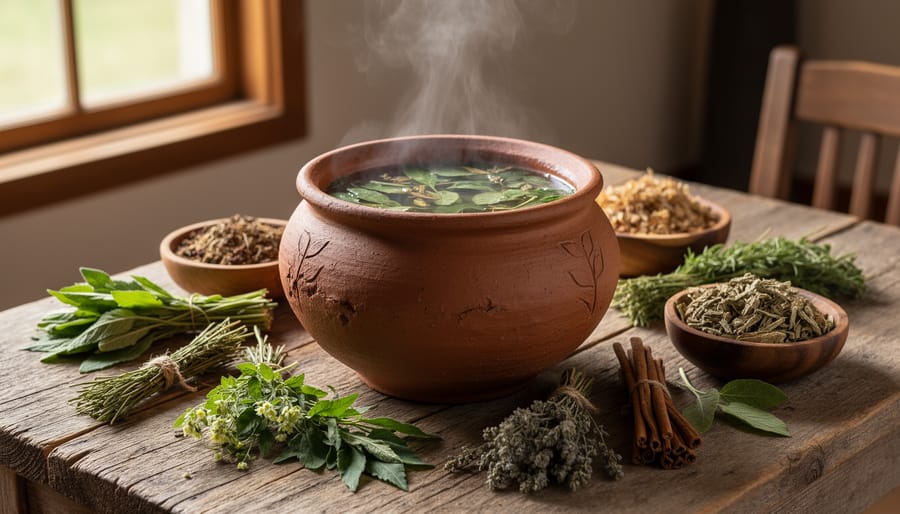
Long before commercial tea and coffee arrived on these shores, indigenous communities throughout British Columbia developed an extensive knowledge of plant-based beverages that served as daily refreshment, powerful medicine, and ceremonial tools. These traditional drinks represent thousands of years of observation, experimentation, and spiritual connection with the land’s botanical offerings.
The practice of brewing teas from native plants formed an essential part of everyday life. Labrador tea, harvested from the leathery-leaved shrub that thrives in BC’s bogs and wetlands, provided a robust, earthy drink that warmed gatherings during cold months. Spruce tip tea, gathered in spring when new growth appears bright green and tender, delivered a citrusy burst of vitamin C that prevented scurvy and supported immune health through winter. These everyday beverages weren’t simply about hydration. They carried preventive medicine in every cup, addressing seasonal health needs with precision that modern nutritional science now validates.
Some plants yielded drinks reserved for healing specific ailments. Devil’s club, a formidable plant armed with fierce spines, produced a decoction used to treat diabetes-like symptoms, arthritis, and respiratory conditions. Rose hip tea offered concentrated nutrition after the first frost sweetened the berries. Fireweed, abundant across BC’s forests and clearings, created a gentle tea used to ease digestive troubles and women’s health concerns.
- Tsuwá:ye (Stó:lō) – Stinging Nettle Tea
- Young nettles steeped to create a mineral-rich tonic used for blood purification and joint health. Gathered in early spring wearing protective cedar bark gloves.
- Sk’elép (Secwepemc) – Devil’s Club Tea
- Inner bark carefully harvested and boiled into a powerful medicine for blood sugar regulation and immune support. Never taken casually; used under guidance of knowledge keepers.
- T’ákw (Tlingit) – Hemlock Needle Tea
- Western hemlock tips brewed into a slightly sweet, resinous drink high in vitamin C. Distinguished from poisonous species through traditional identification knowledge passed down through generations.
- Sk̓ʷmáyx̌ʷtn (Skwxwú7mesh) – Cedar Tea
- Made from fresh cedar boughs, this ceremonial and medicinal drink treated colds and fevers while also serving spiritual cleansing purposes before important gatherings.
Beyond medicinal applications, certain beverages held ceremonial significance. Preparations used in spiritual practices often combined multiple plants, and their recipes remain protected knowledge shared only within specific communities. These sacred drinks facilitated vision quests, healing ceremonies, and coming-of-age rituals.
The knowledge of which plants to harvest, when to gather them, and how to prepare them safely represents intellectual property developed over millennia. Some plants require specific preparation to be safe. Others must be harvested at precise times to capture their medicinal compounds without harming the plant population. This wisdom, held by elders and traditional healers, distinguishes effective medicine from potentially dangerous experimentation.
Today, some indigenous communities share selected traditional drink knowledge through cultural experiences, allowing visitors to taste these ancient beverages while learning their stories. These encounters offer a sensory gateway into understanding how native food and drink traditions viewed nourishment as inseparable from healing, ceremony, and relationship with the living world.
Food as Medicine: The Wellness Connection
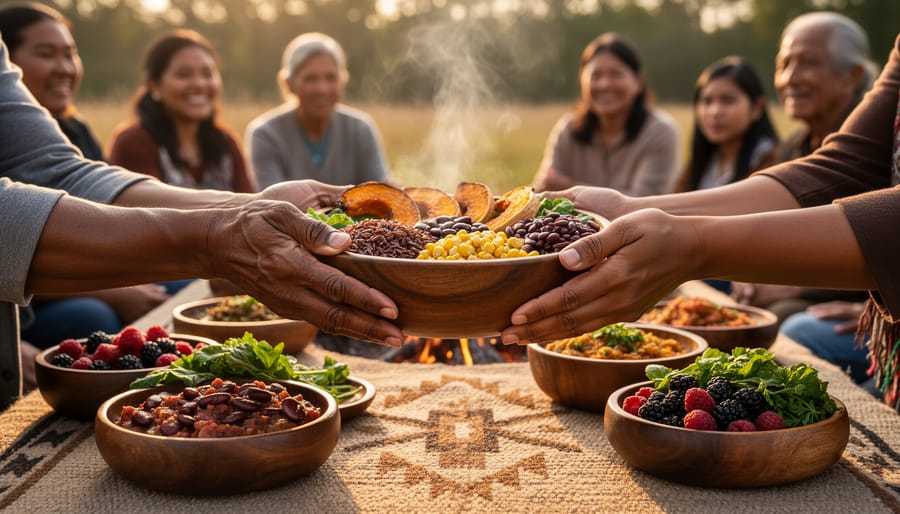
For thousands of years before the arrival of Western medicine, indigenous peoples of British Columbia understood a fundamental truth: food is medicine, and medicine is food. This holistic approach to wellness recognized no separation between nourishment and healing. Every salmon caught, every berry picked, every root dug from the earth served a dual purpose in sustaining both body and spirit.
Traditional indigenous foods evolved alongside the people who harvested them, creating a perfect nutritional match for BC’s diverse climates and seasonal cycles. Coastal peoples who relied heavily on salmon developed bodies that efficiently processed omega-3 fatty acids. Communities in colder regions who consumed high-fat foods like eulachon oil built metabolisms suited to harsh winters. This wasn’t coincidence, it was thousands of generations of adaptation to place.
The native wellness institute and similar organizations now document what elders have always known: traditional foods contain precisely the nutrients indigenous bodies need to thrive. Salmon roe, considered a delicacy and given to pregnant women and children, contains exceptional levels of vitamin D, selenium, and DHA, nutrients often deficient in modern diets. Seaweed, harvested year-round from coastal waters, provides iodine, iron, and trace minerals that support thyroid function and immune health.
Modern science increasingly validates this ancestral wisdom. Research shows that devil’s club, used for centuries to regulate blood sugar, contains compounds with anti-diabetic properties. Labrador tea, brewed as a daily tonic, demonstrates powerful antioxidant activity. Fermented salmon eggs, preserved using traditional methods, contain probiotics that support gut health long before anyone understood the microbiome.
The genius of indigenous food knowledge lies in understanding relationships. A meal wasn’t evaluated solely by calories or individual nutrients, but by how foods worked together and how they connected the eater to the land. Salmon paired with berries wasn’t just delicious, the vitamin C enhanced iron absorption. Cooking with cedar added antimicrobial compounds. Every choice reflected accumulated wisdom about what the body needs.
When indigenous communities were forced away from traditional foods, health deteriorated rapidly. Diabetes, heart disease, and other conditions rare in traditional diets became epidemic. The path back to wellness leads through these ancestral foods, not as nostalgia, but as sophisticated nutritional science proven over millennia.
Experiencing Native Food and Drink Today
Indigenous-Led Culinary Tours and Workshops
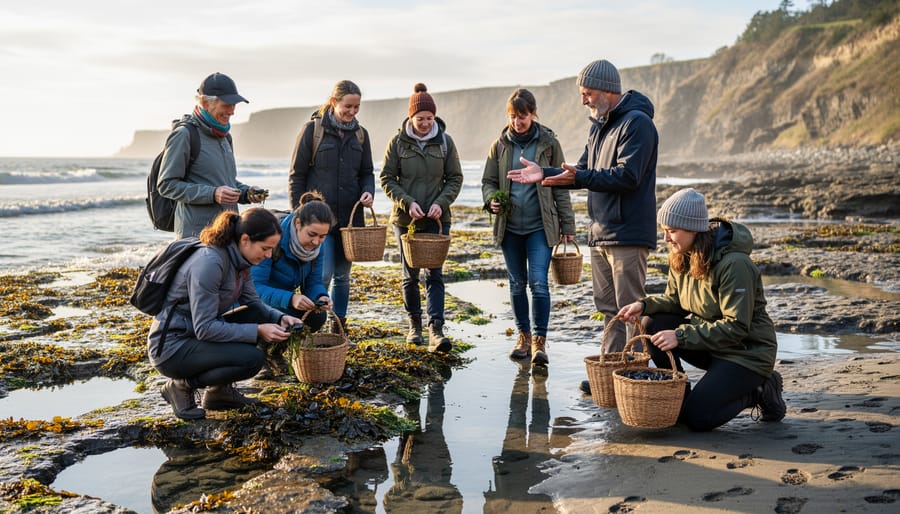
Learning from indigenous knowledge keepers offers the most authentic way to understand the relationship between traditional foods and indigenous health. Across British Columbia in 2026, First Nations guides lead hands-on workshops where travelers forage for wild edibles like stinging nettles and miner’s lettuce, learn to fillet and smoke salmon using cedar planks, or prepare camas bulbs in earth ovens as their ancestors did for thousands of years. These experiences go far beyond cooking demonstrations, they’re opportunities to hear the stories behind each food, understand why certain plants are harvested only at specific times, and participate in protocols that honor the land’s generosity. Many tours include traditional feasts where you’ll taste foods prepared according to recipes passed down through generations, from herring roe on kelp to venison stews flavored with juniper berries. These intimate gatherings, often limited to small groups, create space for meaningful cultural exchange and support indigenous communities directly.
Contemporary Indigenous Cuisine
Indigenous chefs across British Columbia are sparking a culinary revolution, one that honors thousands of years of food wisdom while pushing creative boundaries. They’re taking ancestral ingredients, wild salmon, venison, seaweed, salmonberries, and presenting them through contemporary lenses that surprise and delight modern palates.
At restaurants like Salmon n’ Bannock in Vancouver, chefs blend traditional smoking and curing methods with French techniques. Juniper-crusted elk loin sits alongside three-sisters succotash, each dish telling a story of place and heritage. In Victoria, indigenous food trucks serve bannock tacos stuffed with smoked sockeye and pickled fiddleheads, making traditional flavors accessible to curious newcomers.
This movement goes deeper than fusion cooking. Indigenous chefs are reclaiming their culinary heritage after generations of cultural suppression, proving that native food and drink traditions aren’t museum pieces but living, evolving practices. They source ingredients from indigenous harvesters, collaborate with Elders to preserve recipes, and train the next generation of indigenous cooks.
The result? Dishes that taste unmistakably rooted in BC’s landscapes while feeling entirely fresh, wild rice risotto with spot prawns, cedar-braised bison short ribs, huckleberry reduction glazes. It’s cuisine that bridges past and present, proving ancestral knowledge remains profoundly relevant.
Respectful Engagement and Cultural Protocols
Participating in Native Food and Wellness Experiences requires approaching indigenous culture with humility and genuine respect. Food sharing in many First Nations communities is a sacred act that extends beyond mere hospitality, it creates reciprocal relationships and acknowledges spiritual connections between guests, hosts, and the land itself.
Before joining any experience, educate yourself about the specific Nation whose territory you’ll be visiting. Coast Salish protocols differ from those of the Haida or Interior Salish peoples. Listen more than you speak, ask permission before photographing food or ceremonies, and understand that some knowledge is not meant for sharing outside the community.
When engaging with native food and drink experiences, keep these essential guidelines in mind:
- Ask permission before taking photos or videos of ceremonies, foods, or people
- Listen to the stories and teachings offered without interrupting or comparing to other cultures
- Support indigenous-owned businesses and tour operators directly rather than third-party resellers
- Respect when certain foods, recipes, or practices are identified as sacred or community-specific
- Don’t treat indigenous culture as a commodity or extract knowledge without giving back
- Avoid wearing indigenous regalia or ceremonial items as costumes or fashion statements
- Don’t touch sacred objects, ceremonial items, or harvesting tools without explicit permission
Support goes beyond the transaction. Book experiences directly with indigenous operators, purchase from indigenous-owned restaurants and food producers, and advocate for their businesses when you return home. If you’re invited to participate in food preparation or harvesting, approach it as a privilege and learning opportunity, not entertainment.
Recognize that what you’re experiencing represents thousands of years of accumulated wisdom. The protocols around native food and drink aren’t arbitrary rules but living practices that maintain cultural integrity and spiritual connections. Your respectful participation helps preserve these traditions for future generations.
Experiencing native food and drink in British Columbia is more than sampling unfamiliar flavors. When you sit down to a traditional feast, forage for edible plants with a knowledge keeper, or sip Labrador tea while listening to ancestral stories, you’re participating in living traditions that stretch back thousands of years. These experiences create bridges between cultures, allowing you to understand how indigenous peoples have thrived in harmony with this land through sophisticated food systems that modern sustainability experts are only beginning to appreciate.
Every meal shared, every harvesting technique learned, and every story heard around the fire supports the preservation of indigenous knowledge and strengthens community economies. Your participation matters, but how you participate matters even more. Approach these experiences as a student, not a consumer. Ask questions with genuine curiosity, honor the protocols you’re taught, and recognize that food sharing carries spiritual weight in indigenous culture.
The wisdom embedded in native food traditions offers lessons our world desperately needs. Indigenous approaches to seasonal eating, sustainable harvesting, and viewing food as medicine provide blueprints for healthier relationships with the land and with our own bodies. When you return home carrying these insights, you become part of a larger movement honoring indigenous knowledge systems that have sustained both people and ecosystems through countless generations. The flavors may fade from your palate, but the connections you forge and the respect you cultivate will nourish you far longer.