
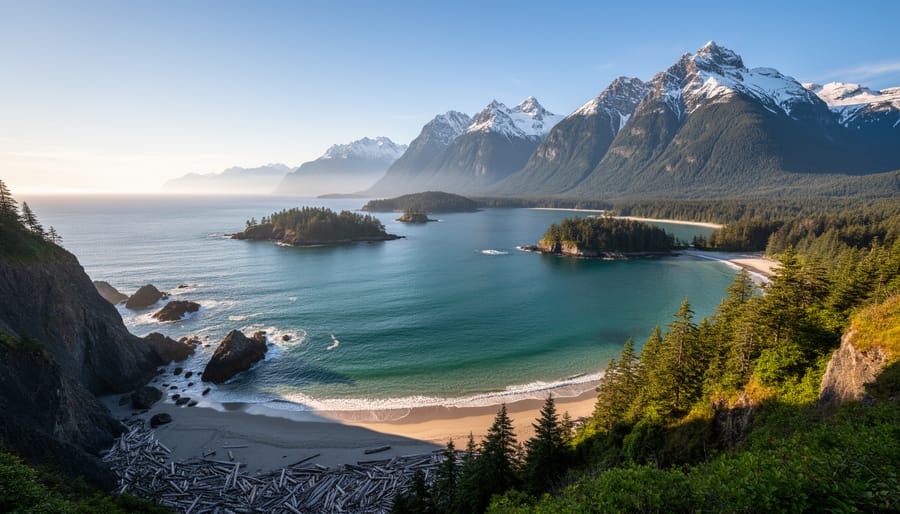
British Columbia is home to seven national parks, each protecting a distinct landscape that ranges from rainforest coastlines to glacier-carved mountain ranges. These federally protected areas, Pacific Rim, Gulf Islands, Mount Revelstoke, Yoho, Kootenay, Glacier, and Gwaii Haanas, span from Vancouver Island’s rugged west coast to the ancient forests of Haida Gwaii and the towering peaks of the Canadian Rockies.
Together, they represent some of the most spectacular wilderness in Canada’s 37-park national system, but what makes BC’s parks unique isn’t just their raw beauty. Each one sits within the traditional territories of First Nations peoples who have stewarded these lands for thousands of years, and many parks now integrate indigenous knowledge and management into their conservation efforts.
If you’re planning outdoor adventures in BC for 2026, understanding the character and location of each park is essential. Pacific Rim National Park Reserve, for instance, stretches along the west coast of Vancouver Island in Nuu-chah-nulth territory and includes three distinct units: the West Coast Trail, Long Beach, and the Broken Group Islands. Meanwhile, the mountain parks of Yoho, Kootenay, Glacier, and Mount Revelstoke cluster in the interior, offering year-round access to alpine ecosystems.
The question of how many parks exist is simple to answer, but the real value lies in knowing which ones align with your interests, whether you’re drawn to coastal kayaking, backcountry hiking, or encounters with old-growth cedar. This guide maps all seven parks, unpacks what makes each one distinctive, and provides the practical details you need to visit responsibly.
Why BC’s National Parks Are Essential Destinations
British Columbia’s seven national parks form a living tapestry of ecosystems that few places on Earth can rival. Within a single province, you can stand in ancient coastal rainforests where Sitka spruce tower overhead, paddle through island-dotted waters teeming with orcas and sea lions, then venture inland to hike beneath massive glaciers that have carved mountains for millennia. These protected spaces safeguard everything from intertidal zones and old-growth cedar forests to alpine meadows ablaze with wildflowers and jagged peaks that pierce the clouds.
The significance of these parks extends far beyond scenic beauty. For the Nuu-chah-nulth, Haida, Ktunaxa, and other First Nations, these territories represent ancestral homelands where creation stories were born, traditional practices continue, and cultural knowledge lives on. Many parks, including Pacific Rim and Gwaii Haanas, are co-managed with indigenous communities, ensuring that stewardship reflects millennia of relationship with these lands. Visiting Indigenous historic sites within these parks offers profound insights into how people have thrived in harmony with these challenging, beautiful environments.
For outdoor enthusiasts and conscious travelers, BC’s national parks deliver experiences that span every adventure style. You can backpack multi-day coastal trails, canoe through pristine island archipelagos, scramble up glacier-carved valleys, or simply drive mountain highways that reveal breathtaking vistas at every turn. These destinations anchor sustainable tourism by channeling visitor energy into protected areas with infrastructure designed to minimize impact while maximizing connection to wilderness. They’re places where conservation succeeds not in isolation, but through the stories visitors carry home and the commitment they inspire to protect wild spaces.
The Seven National Parks of British Columbia
1. Pacific Rim National Park Reserve
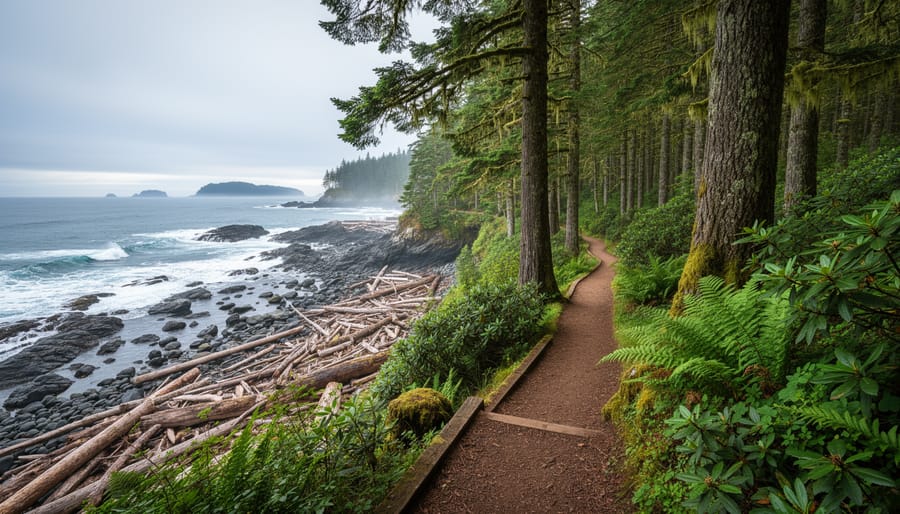
Pacific Rim National Park Reserve stretches along Vancouver Island’s wild west coast, where ancient temperate rainforest meets the raw power of the Pacific Ocean. This park exists within the traditional territories of the Nuu-chah-nulth peoples, whose connection to these lands and waters spans thousands of years. The stories of their ancestors are woven into every cove and cedar stand.
The reserve comprises three distinct units each offering a different way to experience this dramatic coastline. Long Beach unfolds as a sweeping stretch of sand where storm-watching becomes meditation and surfers brave cold water swells. It’s the most accessible unit, perfect for those who want to taste the wild without committing to hardcore backcountry travel.
The West Coast Trail demands more. This 75-kilometre route challenges hikers with ladders, cable cars, and tide-dependent crossings, rewarding them with pristine beaches, coastal waterfalls, and encounters with sea lions and eagles. It’s not a casual stroll, but it delivers the kind of raw adventure that stays with you.
The Broken Group Islands scatter across Barkley Sound like emerald gems. Kayakers thread between over one hundred islets, camping on beaches accessible only by paddle. Here, you’ll find silence broken only by waves and the occasional whale spout on the horizon.
2. Gulf Islands National Park Reserve
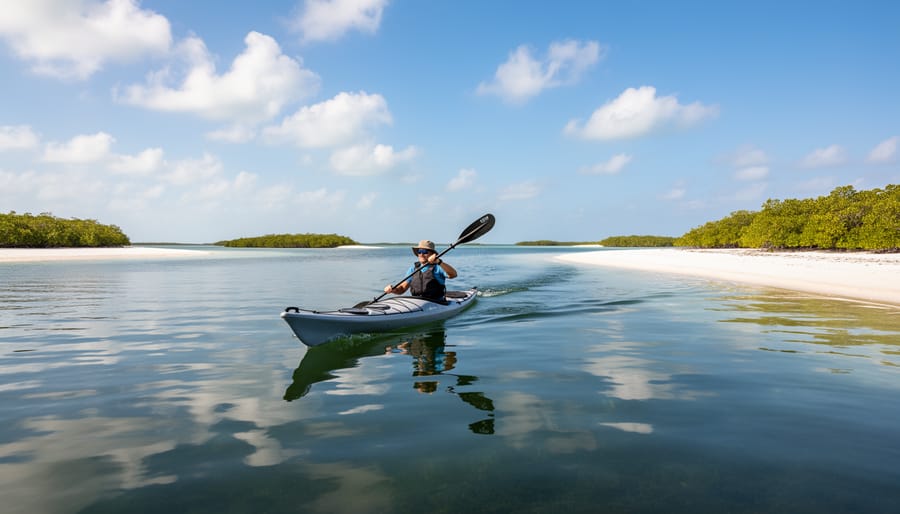
Gulf Islands National Park Reserve protects scattered islands, reefs, and marine waters throughout the Salish Sea, spanning the traditional territories of Coast Salish peoples. Unlike mainland parks, this archipelago requires planning, most islands are accessible only by boat, making it a dream destination for sea kayakers paddling between protected bays and rocky shorelines where harbour seals haul out and eagles nest overhead.
The park safeguards coastal Douglas-fir ecosystems and rare Garry oak meadows that bloom purple with camas in spring, plants the Straits Salish harvested for thousands of years. Today, visitors camp on islands like Sidney or Pender, waking to orcas passing offshore and exploring tidal pools at dawn. The marine environment here supports kelp forests, octopuses, and migrating salmon, species central to Coast Salish culture and economy.
Kayaking remains the signature way to experience this park. You’ll paddle through calm passages separating forested islands, pull ashore for lunch on shell middens that mark ancient village sites, and understand why these waters have sustained communities for millennia. The park’s fragmented geography, fifteen islands and numerous islets, creates intimate, protected spaces where coastal ecosystems and human history intertwine.
3. Mount Revelstoke National Park
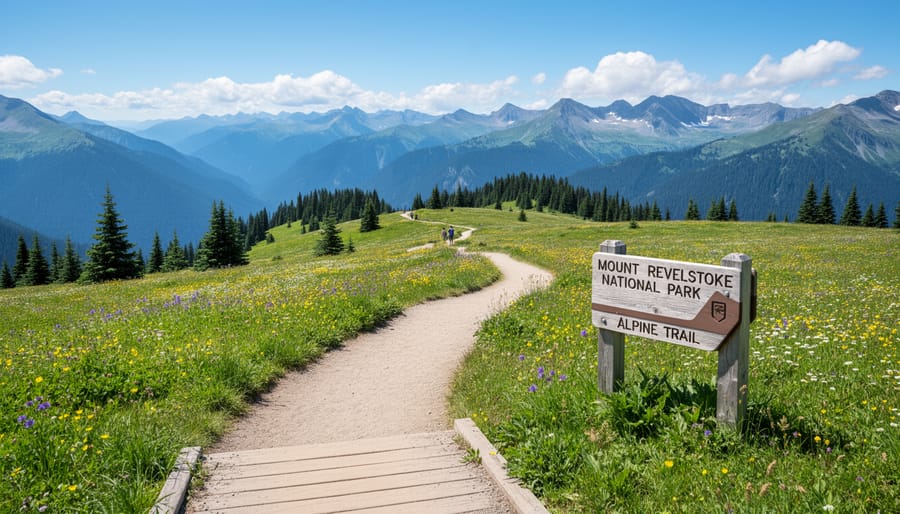
Mount Revelstoke sits in the Selkirk Mountains near the town of Revelstoke, where the Trans-Canada Highway climbs through interior British Columbia. Unlike the remote coastal parks or backcountry-heavy reserves, this one brings alpine wildflower meadows within reach of travelers who prefer shorter hikes and accessible viewpoints.
Drive the Meadows in the Sky Parkway, a winding road that ascends from valley floor to subalpine zone, and you’ll arrive at meadows that bloom with lupine, paintbrush, and glacier lilies in late July and August. Trails from the summit parking area range from gentle loops through these flower fields to longer routes like the Eva Lake Trail, which pushes deeper into old-growth cedar and hemlock forests before opening onto a mountain tarn.
Wildlife viewing here includes black bears grazing meadow edges in summer, mountain goats on rocky slopes, and pine martens darting through the forest understory. Winter transforms the park into snowshoe and backcountry ski terrain, though the summit road closes once snowpack settles in.
Mount Revelstoke’s compact size makes it ideal for a half-day visit while traveling between the Rockies and the coast, or as a base for exploring nearby Glacier National Park.
4. Glacier National Park
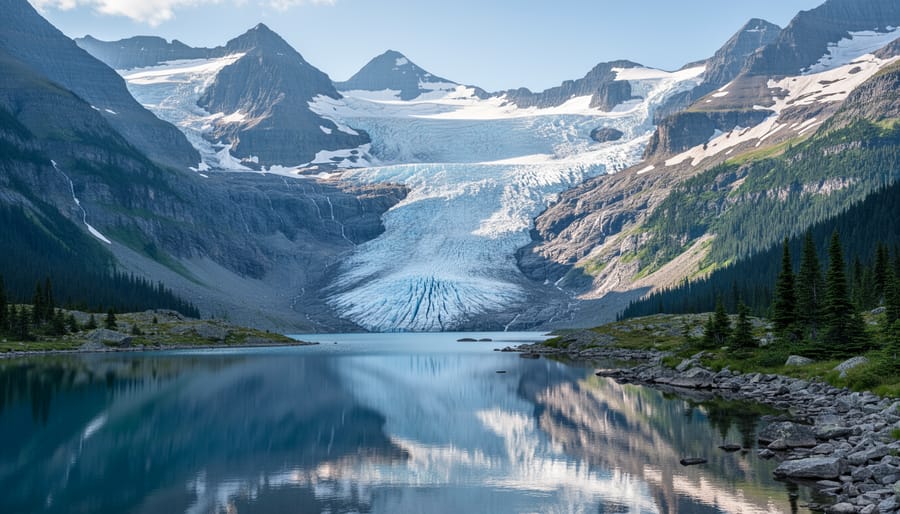
Glacier National Park earns its name honestly. Straddling the Rogers Pass corridor in the Selkirk Mountains, this compact park protects over 400 glaciers and some of the most dramatic alpine terrain in BC. Massive ice fields crown the peaks, carving deep valleys below through millennia of freeze and thaw. The landscape shifts constantly, avalanches thunder down in winter, reshaping slopes and clearing paths for new growth.
This isn’t a park for casual sightseeing. Most visitors glimpse it from the Trans-Canada Highway, but the real character emerges on backcountry routes where you’ll navigate glacier-fed streams and old-growth hemlock forests. The park protects critical habitat for mountain caribou, grizzlies, and wolverines, species that need vast, undisturbed wilderness.
Weather here can turn fierce without warning. Snow persists year-round at higher elevations, and the Rogers Pass area receives some of the heaviest snowfall in Canada. If you’re planning backcountry travel, know your avalanche safety protocols and check current conditions. The reward? Witnessing raw alpine power, glaciers grinding stone, meltwater carving new channels, peaks disappearing into cloud. This park preserves the ancient processes that shaped these mountains and continues to shelter the wildlife adapted to their extremes.
5. Yoho National Park
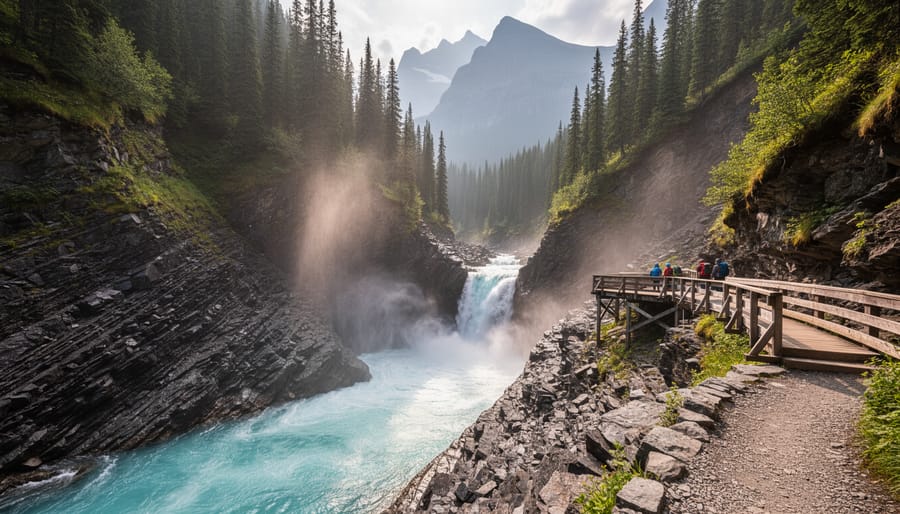
Yoho sits on the western slopes of the Canadian Rockies, where the Kicking Horse River carves through some of the most dramatic terrain in British Columbia. The park’s name comes from a Cree expression of awe, and the landscape delivers: Takakkaw Falls plunges 373 metres in a sheer drop that ranks among Canada’s highest waterfalls, fed by the Daly Glacier above.
The real treasure lies in the Burgess Shale fossil beds high above Field. These 508-million-year-old deposits preserve soft-bodied marine creatures in extraordinary detail, offering a window into the Cambrian explosion when complex life first diversified. Access requires a guided hike, Parks Canada protects the site strictly, but the experience connects you to deep geological time in a way few places can match.
For day hikers, the trail to Emerald Lake loops around glacier-fed water that shifts from turquoise to deep jade depending on light and season. Lake O’Hara, accessible by reservation-only shuttle, opens onto an alpine basin ringed by peaks and larch forests that blaze gold each September. Both areas show why Yoho punches above its weight for scenery despite being one of the smaller Rocky Mountain parks.
6. Kootenay National Park
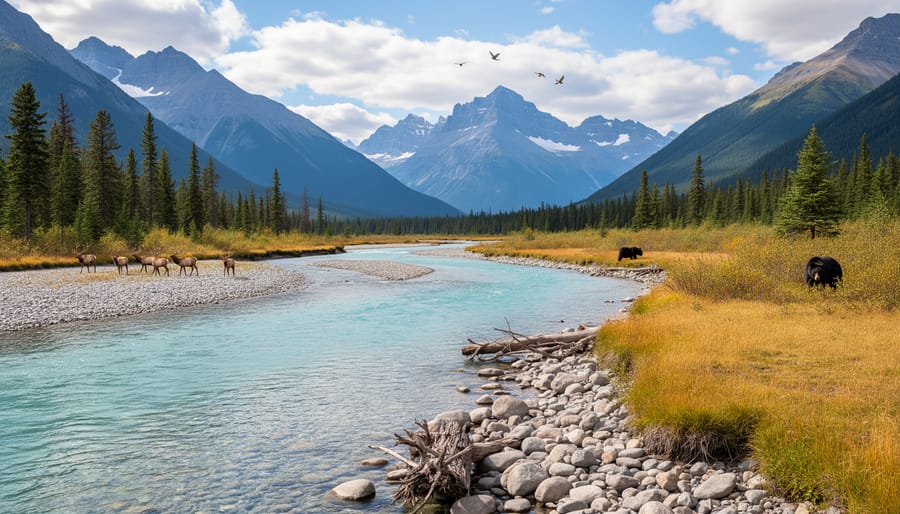
Kootenay carves a north-south corridor along the western slopes of the Rockies, protecting an astonishing range of ecosystems in a relatively narrow strip. You’ll descend from glaciated alpine peaks near the Continental Divide through montane forests to the semi-arid grasslands of the Kootenay River valley, a 1,200-metre elevation drop that creates habitat for everything from mountain goats to rattlesnakes. This vertical diversity makes Kootenay a critical wildlife corridor, allowing species to migrate between climate zones as seasons shift.
The park’s most distinctive feature is Radium Hot Springs, where mineral-rich water emerges at the confluence of mountain and valley ecosystems. Nearby, ochre beds reveal where Ktunaxa peoples harvested sacred red earth for ceremonies and trade. The Paint Pots, vivid pools stained by iron oxide, remain a spiritual site.
Unlike neighbouring Rocky Mountain parks that draw crowds to iconic peaks, Kootenay offers quieter trails through fire-scarred forests demonstrating natural regeneration, and the chance to soak in thermal waters after a day hiking Floe Lake or Kindersley Pass. Its role as a connecting corridor means wildlife sightings, elk, bighorn sheep, black bears, are frequent, especially along the valley floor where the highway traces ancient indigenous travel routes through the mountains.
7. Gwaii Haanas National Park Reserve
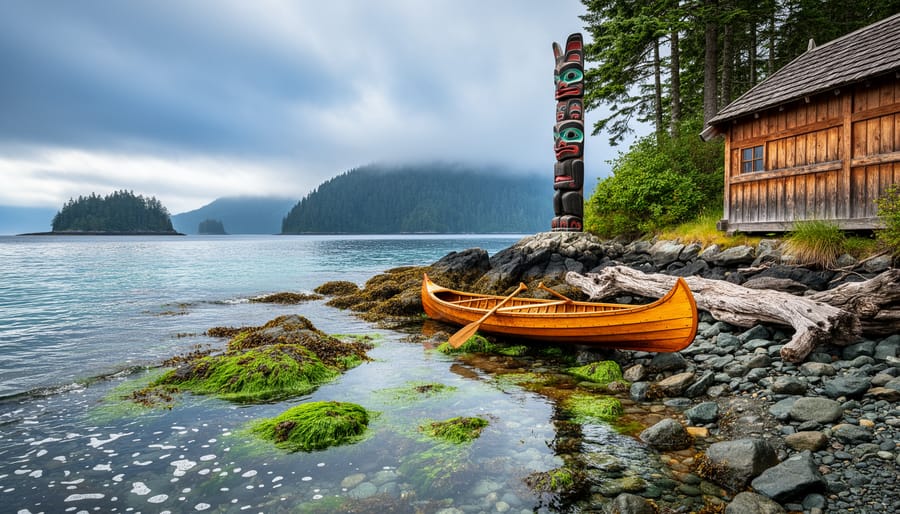
Gwaii Haanas National Park Reserve protects an ancient archipelago where cedar forests meet the Pacific and Haida culture runs as deep as the ocean currents. Located 130 kilometres off the northern coast of BC, this remote park co-exists with Gwaii Haanas National Marine Conservation Area Reserve and Haida Heritage Site in a collaborative management model between Parks Canada and the Haida Nation, known locally as “from mountaintop to seafloor.”
The islands hold centuries of Haida history. SGang Gwaay (Ninstints), a UNESCO World Heritage Site within the park, preserves weathered mortuary and memorial poles that stand as testament to villages inhabited for thousands of years before European contact. These aren’t museum pieces behind glass, they’re slowly returning to the forest as the Haida intended, watched over by Haida Watchmen who share stories passed through generations.
Reaching Gwaii Haanas requires commitment. There are no roads. Visitors arrive by boat or floatplane from the northern communities of Haida Gwaii, often joining guided kayaking expeditions or chartered boat tours. The reward is profound: paddling past old-growth Sitka spruce that witnessed the last ice age, camping on shell-midden beaches, and spotting humpback whales in waters where orcas hunt. Black bears forage the shoreline at low tide.
Before visiting, you’ll attend a mandatory orientation session where Haida Watchmen explain cultural protocols and the ecological fragility of this place. Visitor numbers are limited to protect both the land and its stories, ensuring this convergence of natural beauty and living culture remains intact.
Planning Your National Park Visit: Practical Information
Getting to BC’s national parks requires different approaches depending on location. Pacific Rim, Gulf Islands, and Gwaii Haanas on the coast involve ferry travel or floatplane access, while the mountain parks (Yoho, Kootenay, Glacier, Mount Revelstoke) sit along the Trans-Canada Highway and other major routes. Gwaii Haanas is the most remote, requiring boat or plane from Haida Gwaii, which itself demands advance planning.
Parks Canada charges a daily entry fee of roughly $10 per adult, with annual Discovery Passes offering better value if you’re visiting multiple sites. Some parks require additional permits for backcountry camping or specific trails like the West Coast Trail, which uses a quota system and books months ahead.
| Park | Region | Access Point | Best Season |
|---|---|---|---|
| Pacific Rim | Vancouver Island (west coast) | Tofino/Ucluelet | July-September (Long Beach); May-September (West Coast Trail) |
| Gulf Islands | Southern Gulf Islands | BC Ferries from Tsawwassen or Swartz Bay | May-October |
| Mount Revelstoke | Selkirk Mountains | Revelstoke (Trans-Canada Hwy) | July-September (meadows); Year-round |
| Glacier | Selkirk & Purcell Mountains | Rogers Pass (Trans-Canada Hwy) | July-September (hiking); Winter (backcountry skiing) |
| Yoho | Canadian Rockies | Field (Trans-Canada Hwy) | June-September |
| Kootenay | Canadian Rockies | Radium Hot Springs (Hwy 93) | June-September |
| Gwaii Haanas | Haida Gwaii | Boat/plane from Sandspit or Queen Charlotte | May-September |
Accommodation ranges from frontcountry campgrounds (reservable through Parks Canada) to backcountry sites requiring permits. The mountain parks have campgrounds that fill quickly in summer, so book early. Coastal parks often pair with nearby towns: Tofino for Pacific Rim, Radium for Kootenay, Field for Yoho. Gwaii Haanas has no facilities inside the reserve, meaning you camp self-sufficiently or book guided trips.
Weather shifts dramatically between coast and mountains. Coastal parks stay milder but wetter year-round, while mountain parks see heavy snow into June and afternoon thunderstorms in summer. Pack layers, rain gear, and check conditions before heading out, especially for backcountry travel where alpine routes can remain snow-covered well into July.
Local Tips for Exploring BC’s National Parks Sustainably
Protecting BC’s national parks starts with you. Every step you take in these landscapes either supports their preservation or contributes to their degradation. The good news is that being a responsible tourist doesn’t require sacrifice, it just asks for awareness and respect.
Start with leave no trace fundamentals. Pack out everything you bring in, stay on designated trails to prevent erosion, and resist the urge to stack rocks or carve initials. In coastal parks like Pacific Rim and Gulf Islands, treat tide pools as living galleries: look, photograph, but don’t touch or remove anything.
Wildlife safety demands BC-specific knowledge. Carry bear spray in mountain parks and know how to use it, black bears and grizzlies require different responses. Make noise on trails, especially near streams where rushing water masks your approach. In coastal areas, maintain serious distance from sea lions and seals; they’re deceptively fast and surprisingly aggressive when approached. Never position yourself between any animal and the water or its escape route.
- Ask permission before photographing indigenous cultural sites, village remains, or totems, these aren’t museum exhibits but living heritage
- Layer clothing for mountain parks where weather shifts drastically within hours; coastal parks demand waterproof gear year-round
- Book indigenous-guided experiences when available, you’ll gain knowledge no guidebook offers while supporting communities connected to these lands for millennia
- Camp only in designated areas and use established fire rings; wilderness campfires are increasingly restricted due to wildfire risk
- Download offline maps before entering parks, cell service is unreliable to nonexistent across most of BC’s protected areas
Cultural protocols matter deeply in parks like Gwaii Haanas, co-managed with the Haida Nation. Walk softly through ancient village sites. These aren’t ruins but ancestors’ homes, still tended by their descendants. When you engage with indigenous tourism operators, you’re not just getting a tour, you’re participating in the continuity of stewardship that has protected these ecosystems for thousands of years.
What to Watch For
Weather and seasonal closures shift fast in BC’s mountain and coastal parks. Check Parks Canada’s website the week before you go, roads can close without warning due to snow, avalanche risk, or washouts, particularly in Glacier, Yoho, and Kootenay from October through May. Remote access to Gwaii Haanas requires marine transport that’s weather-dependent and books months in advance.
The term “reserve” signals ongoing treaty negotiations rather than lesser protection. These landscapes hold the same ecological safeguards as full national parks while respecting indigenous jurisdiction over traditional territories. When visiting sites with cultural significance, ancient village locations, ceremonial areas, or traditional gathering places, follow posted guidance and consider joining an indigenous-led tour to understand the deeper stories these lands hold. Your awareness protects both the ecosystems and the cultural heritage woven into them.
Common Questions About BC’s National Parks
Are there more provincial parks than national parks in BC?
Yes, by far. British Columbia has hundreds of provincial parks compared to its seven national parks, though national parks typically protect larger wilderness areas and operate under federal jurisdiction.
What’s the difference between a national park and a national park reserve?
A national park reserve is managed like a full national park but has outstanding indigenous land claims that need resolution. Three of BC’s seven parks, Pacific Rim, Gulf Islands, and Gwaii Haanas, carry this reserve designation while indigenous rights are negotiated.
Do you need separate passes for each park?
No. A Parks Canada pass covers entry to all national parks across the country, making it economical if you’re visiting multiple parks during your BC trip.
Can you visit multiple parks in one trip?
Absolutely, though geography matters. The mountain parks, Yoho, Kootenay, Glacier, and Mount Revelstoke, cluster along the Trans-Canada Highway, while coastal parks like Pacific Rim and Gulf Islands require separate ferry or boat access.
Many visitors wonder about the indigenous stories woven through these landscapes. Each park holds deep cultural significance, from Haida creation stories in Gwaii Haanas to Secwepemc and Ktunaxa connections in the mountain parks. When you visit, look for interpretive programs led by indigenous guides who share oral histories passed down through generations. These stories aren’t just historical context, they’re living knowledge that enriches how you experience these protected spaces and understand the reciprocal relationship between people and land.
British Columbia’s seven national parks offer you far more than scenic postcards. They hold stories that stretch back thousands of years, ecosystems that exist nowhere else on Earth, and opportunities to witness the careful balance between preservation and sharing these spaces with visitors like you. From the tide-carved shores of Pacific Rim to the glacier-hung peaks of Yoho, from the mist-draped forests of Gulf Islands to the sacred village sites of Gwaii Haanas, each park protects a distinct piece of this province’s natural and cultural heritage.
When you visit these protected landscapes, you’re walking trails shaped by indigenous knowledge, observing wildlife in corridors their ancestors safeguarded, and experiencing places that continue to hold deep spiritual significance for First Nations communities. Travel lightly. Listen to the stories. Respect the protocols. Support indigenous-led experiences that deepen your understanding of these lands.
These seven parks don’t just preserve wilderness, they preserve relationships between people and place that have endured for millennia. Your journey through them connects you to both the raw power of nature and the rich cultural tapestry that makes British Columbia truly extraordinary.