
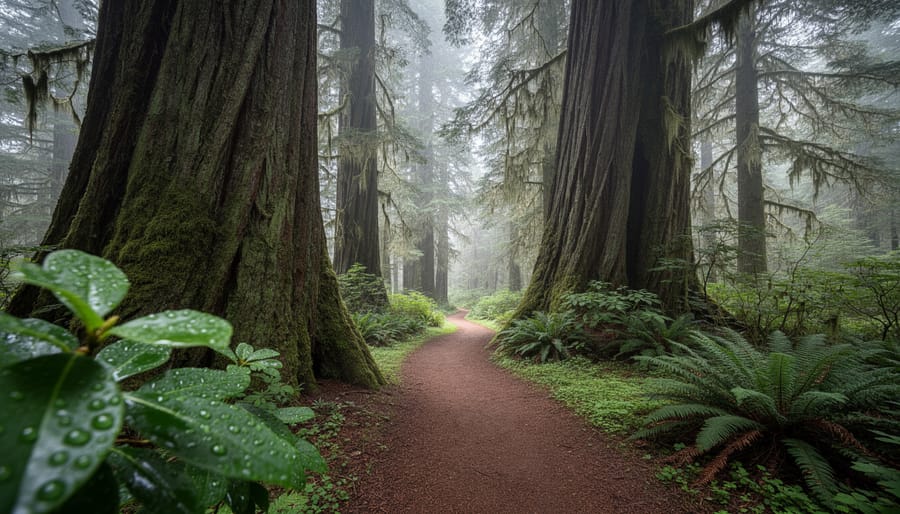
Beautiful natural landscapes offer more than scenic views. They provide transformative experiences where ancient Indigenous wisdom, geological wonder, and raw wilderness converge to reshape how we see our place in the natural world. British Columbia holds some of the planet’s most diverse and breathtaking terrain, from coastal temperate rainforests that have stood for millennia to alpine meadows where grizzlies still roam free.
The search for stunning natural beauty brings travelers to crossroads between aspiration and discovery. You want to witness landscapes that stir something deep, places that photographs barely capture. But you also need practical guidance: which destinations deliver that transformative power, when to visit, and how to experience them with respect for the lands and peoples who have stewarded them for thousands of years.
BC’s geography compresses what would span continents elsewhere into a single province. Within hours, you can move from Pacific surf breaking on wild beaches to glacier-carved valleys where mountain peaks pierce clouds. These aren’t just pretty backdrops. They’re living landscapes shaped by Coast Salish, Haida, Kwakwaka’wakw, Secwepemc, and dozens of other First Nations whose stories, place names, and sustainable practices remain woven into every watershed and forest.
This guide takes you through BC’s most visually stunning regions with a focus on what makes each landscape remarkable, how Indigenous peoples have lived in relationship with these places, and how you can visit responsibly in 2026. Prepare to encounter beauty that challenges your assumptions about what wilderness means.
Coastal Rainforests: Where Ancient Trees Meet the Pacific
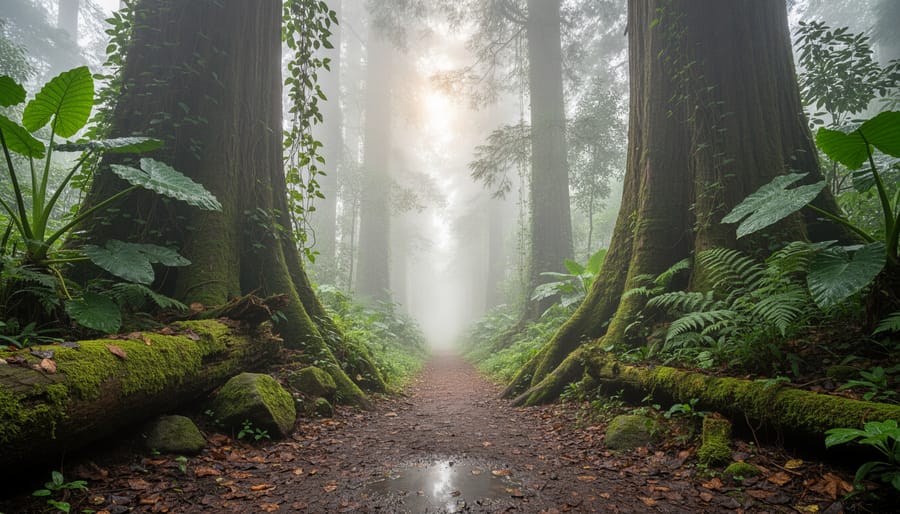
Step into British Columbia’s coastal rainforests and you enter a realm where time moves differently. These temperate rainforests rank among the planet’s most productive ecosystems, where 200 inches of annual rainfall nourishes forests that have stood since before European contact. Walk beneath western red cedars five meters across at the base, their bark fibrous and warm to the touch, their canopies vanishing into persistent coastal mist. Sitka spruces tower 90 meters overhead, their trunks disappearing into clouds that roll off the Pacific. Everything drips. Everything grows.
The forest floor tells its own story, a thick carpet of moss in emerald shades you didn’t know existed, sword ferns as tall as your shoulders, nurse logs decomposing into new life. Bigleaf maples wear coats of moss and licorice fern, their branches transformed into aerial gardens. Light filters green through multiple canopy layers, creating a cathedral effect that needs no architect. Scientists have identified over 1,000 species living in a single old-growth tree here.
For Coast Salish, Nuu-chah-nulth, Kwakwaka’wakw, and other First Nations, these forests were never wilderness, they were home, pharmacy, building supply, and spiritual center combined. Western red cedar, called “tree of life,” provided canoes, longhouses, clothing, baskets, and ceremonial regalia. Indigenous forest management practices, including controlled burning and selective harvesting, shaped these ecosystems for thousands of years. The forests you see today reflect millennia of stewardship, not untouched nature.
Experience these living cathedrals at Cathedral Grove on Vancouver Island, where 800-year-old giants line an accessible boardwalk, or venture to the remote Carmanah Walbran Provincial Park, where some of Canada’s tallest trees grow in valleys that have never seen a chainsaw. The Great Bear Rainforest, spanning 6.4 million hectares of BC’s central and north coast, represents one of the world’s largest intact temperate rainforests. Visit between May and September 2026 when trails are most accessible, but bring rain gear regardless, these forests didn’t earn their name by accident.
Alpine Meadows and Mountain Peaks: Reaching for the Sky
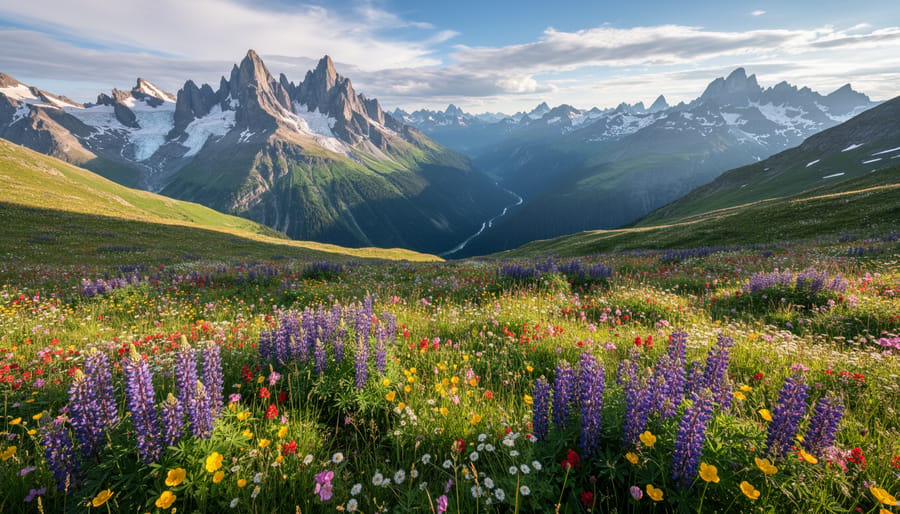
Above the treeline, British Columbia’s alpine realm unfolds in a palette that shifts with the seasons, from June’s tentative snowmelt revealing the first glacier lilies to August’s riot of wildflowers blanketing entire mountainsides. The Coast Mountains march inland from the Pacific in successive waves of granite spires, while eastward, the Canadian Rockies carve the sky with limestone ramparts that catch morning light in shades of rose and amber.
Summer transforms these high places into natural gardens. Indian paintbrush flames red against purple lupine. Western anemone carpets the meadows like fallen snow, while mountain heather creates cushions of pink and white across rocky slopes. These brief growing seasons produce displays so vivid they seem almost unreal, a concentrated burst of life in landscapes where winter reigns eight months of the year.
The mountains hold profound meaning in indigenous worldview. For Interior Salish peoples, high peaks serve as places of vision quests and spiritual preparation. The Secwepemc speak of mountains as gathering places where earth meets sky, where young people would go to fast and seek guidance. These aren’t merely beautiful natural landscapes, they’re living entities, teachers in stone and ice.
Glacial valleys carve between the peaks, their U-shaped contours still marked by ice age forces. Turquoise streams pour from retreating glaciers, carrying rock flour that creates those signature milky-blue colors. Moraines tell stories of advance and retreat, while erratic boulders sit like sculpture dropped from above.
Access ranges from roadside viewpoints to challenging multi-day traverses. The Sea-to-Sky Gondola delivers alpine vistas without the climb. Whistler’s high-country trails reward moderate hikers with flower meadows and marmot sightings. For experienced trekkers, routes through Garibaldi Provincial Park or along the Rockwall Trail in Kootenay offer immersion in wilderness where weather changes by the hour and self-reliance matters.
Standing on a windswept ridge at dawn, watching light pour across peak after peak receding to the horizon, you understand why First Nations teachers describe mountains as places that make humans humble. The scale alone puts everything into perspective.
Lakes and Rivers: Reflections of Wilderness
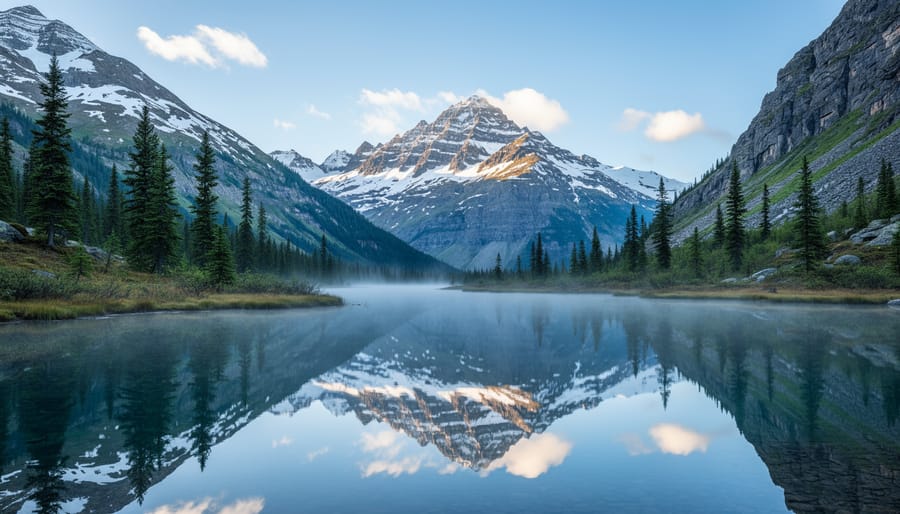
British Columbia’s freshwater landscapes shimmer with a beauty that shifts by the hour, glacial lakes glowing impossible shades of turquoise beneath midday sun, rivers threading through valleys like liquid silver at dawn, and still mountain tarns that mirror peaks so perfectly you lose track of where rock ends and reflection begins. These waters are more than scenery. They pulse with life, shaping ecosystems from microscopic diatoms to spawning salmon, and they carry stories that indigenous communities have told for thousands of years.
The glacial lakes earn their otherworldly colour from rock flour, fine sediment ground by glaciers and suspended in the water, scattering light into those vivid blues and greens that look almost unreal in photographs. Stand at the shore of one of these lakes in late afternoon and watch how the colour deepens as the angle of light shifts, how wind patterns ripple across the surface in darker patches, how the water seems to hold the sky inside it. The surrounding forests press close, reflected upside-down in such detail you can count individual trees.
Water is the first medicine, the source of all life, without it, nothing breathes, nothing grows, nothing continues.
This understanding runs through Secwepemc, Syilx, and other interior nations’ teachings about these waterways. Rivers like the Fraser and Thompson were highways long before roads existed, their rhythms dictating travel, trade, and the seasonal movements that followed salmon runs. Lakes provided not just fish but gathering places, spiritual sites where vision quests unfolded and ceremonies marked the turning of seasons.
The power of BC’s river systems reveals itself in spring when snowmelt swells them into churning forces that reshape banks and carry entire trees downstream. By late summer, those same rivers run clear and low, exposing gravel bars where you can watch salmon navigate the shallows. Each waterway hosts its own ecosystem, cold mountain streams where Dolly Varden hold in deep pools, warm valley rivers where painted turtles sun themselves on logs, wetland channels where great blue herons stand motionless as sculptures.
These waters still offer what they always have: renewal that goes deeper than recreation. There’s something about moving water, a river’s steady conversation with itself, the lap of wavelets on a lakeshore, that quiets the mind’s noise and pulls you into the present moment with surprising force.
Coastal Fjords and Island Shores: Where Land Surrenders to Sea
British Columbia’s coastline carves one of Earth’s most dramatic marriages of land and sea. Here, granite cliffs plunge thousands of feet into cold Pacific waters, creating the deep-cut fjords that give this coast its raw, almost Nordic character. The Great Bear Rainforest’s network of inlets stretches inland like gnarled fingers, each channel a corridor of wilderness where seals haul out on rocky shelves and eagles perch in wind-twisted shore pines.
The island archipelagos scattered offshore form a maze of passages that have served as highways for Haida, Nuu-chah-nulth, and Kwakwaka’wakw peoples for thousands of years. These maritime nations developed sophisticated relationships with tides, currents, and seasons, reading the ocean’s moods as fluently as inland peoples read forest trails. Their ocean-going canoes, carved from single cedars, could navigate channels that modern sailors approach with caution and detailed charts.
At low tide, the shoreline transforms into an exhibition of marine abundance. Tide pools become windows into underwater ecosystems where purple sea stars cling to mussels, green anemones wave their tentacles, and hermit crabs scuttle between urchins and kelp holdfast. This intertidal zone sustained coastal communities with shellfish, seaweed, and rockfish, a tradition that continues in regulated harvests today.
Storm-swept beaches on the outer coast present a different character entirely. Winter swells roll in unobstructed from Japan, throwing driftwood logs like kindling and carving the sand into new formations with each tide. The raw power humbles visitors who stand at land’s edge, salt spray stinging their faces.
For 2026 visitors, sea kayaking offers intimate access to protected inlets where porpoises surface nearby and the only sound is your paddle dipping into glassy water. Whale watching tours from Vancouver Island and Haida Gwaii connect you to orca pods and migrating humpbacks. Always check with local First Nations about protocol when traveling through traditional territories, and time coastal trips around weather windows and tidal movements.
Desert and Grassland Valleys: BC’s Unexpected Beauty
The Okanagan Valley sprawls across BC’s southern interior like a secret kept in plain sight, a landscape so unlike the province’s rainforest reputation that first-time visitors often question whether they’ve crossed into another country entirely. Here, under relentless summer sun, sagebrush carpets rolling hills in silvery green, prickly pear cacti bloom improbable yellow flowers, and rattlesnakes bask on sun-warmed rocks. This is Canada’s only true desert ecosystem, and it harbors some of the most beautiful natural landscapes in British Columbia.
The Interior Salish peoples, including the Syilx Okanagan Nation, have thrived in these arid valleys for thousands of years, developing deep knowledge of plants like bitterroot and balsamroot that sustained their communities. They understood what modern visitors are just discovering: these grasslands possess their own stark beauty. Golden waves of bunchgrass ripple across benchlands, antelope brush releases its sharp perfume after rain, and the light here is different, harsher, more honest, painting everything in high contrast.
Spring transforms these valleys into unexpected gardens. Arrowleaf balsamroot blankets entire hillsides in brilliant yellow, while mariposa lilies and shooting stars emerge from what looked like barren ground weeks earlier. By summer, the landscape shifts to amber and umber, the palette of resilience. Bighorn sheep navigate cliff faces above the valleys, while western meadowlarks call from fence posts.
These ecosystems are among BC’s most endangered, with less than thirty percent of native grassland remaining. Walking through them feels like bearing witness, to adaptation, to beauty forged by scarcity, to landscapes that demand we reconsider what wilderness looks like.
Experiencing These Landscapes Responsibly
Experiencing BC’s stunning wilderness requires more than enthusiasm, it demands respect for the land and the peoples who have stewarded it for thousands of years. Your journey through these beautiful natural landscapes becomes meaningful when you travel mindfully.
Before visiting any territory, learn whose traditional lands you’ll be exploring. Many First Nations communities welcome visitors but ask that you follow specific cultural protocols. Photography restrictions may apply at sacred sites, and some areas remain off-limits to non-indigenous visitors. Check with local tourism offices or indigenous tourism organizations for guidance.
The Leave No Trace principles form your baseline, but go further. Pack out everything you bring in, stay on established trails to prevent erosion, and keep wildlife wild by observing from a distance. Never feed animals or approach nesting birds. In fragile alpine environments, a single footstep off-trail can destroy vegetation that took decades to establish.
When planning your 2026 visit, timing matters. Spring runoff makes rivers dangerous through May and June. Wildfire season typically peaks July through September, occasionally closing access to entire regions. Winter travel requires avalanche awareness and proper equipment. Research current conditions before you depart, not just seasonal averages.
Support indigenous-owned tourism operations, guides, and accommodations whenever possible. These businesses offer authentic cultural experiences while keeping economic benefits within the communities connected to these lands. Your spending becomes an act of reconciliation.
Practice these fundamentals to honor the landscapes you explore:
- Obtain required permits and pay park fees that fund conservation
- Camp only in designated areas, never dispersed in sensitive ecosystems
- Respect seasonal closures protecting wildlife during breeding or migration
- Ask permission before entering reserves or private indigenous lands
- Choose tour operators committed to sustainability and cultural education
- Carry bear spray in appropriate regions and store food properly
These places have endured millennia. Your responsibility is ensuring they endure millennia more.
British Columbia’s beautiful natural landscapes offer more than breathtaking vistas, they provide pathways to transformation. Each journey into these spaces reconnects us to something essential: the rhythm of ancient forests, the wisdom embedded in indigenous stories, the humility that comes from standing beneath mountain peaks that have witnessed millennia. These outdoor escapades change us, stripping away the noise of daily life and reminding us of our place within something vast and sacred. As you plan your 2026 exploration of BC’s wilderness, carry respect as your compass and wonder as your guide. The land awaits those willing to listen, to learn, and to walk gently upon paths that indigenous peoples have honored for generations. Your journey begins not with a destination, but with openness to what these remarkable places will reveal.